When visiting the veterinarian, dog lovers around the world dread hearing two words: Hip Dysplasia. But what exactly is hip dysplasia, and what are the options when our beloved canine companions receive this diagnosis?
Hip dysplasia is one of the most studied veterinary
conditions in dogs,
and is the most common single cause of canine arthritis of
the hips.
The disorder is commonly caused by a genetic malformation of the hip
socket, but may be triggered by early injury, excess weight or repetitive
motion before a dog is fully developed (this is why early competition and
jogging are ill-advised for pups under 18 months old). Hip dysplasia results in pain and mobility
difficulties.
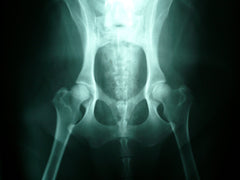
Ideally, the round head of your dog’s femur should sit snugly in a perfectly paired hip socket. Both the femur head (orossis femoris) and socket (acetabula) are cushioned nicely with cartilage, and your canine BFF should be able to shake those happy hips till the cows come home. (If you happen to have cows, that is...)
The photo below details what normal canine hips should look like. (photo by Joel Mills)
Sadly, when hip
dysplasia is present, the femur’s head is not-so-round, and the socket is not a
snug enough fit.
This can cause the following troubles for your dog:
- Uneven cartilage wear and tear, which necessitates constant regeneration of cartilage. Cartilage regeneration takes a long time; longer than wear and tear causes degeneration, so it becomes a never-ending battle.
- Change in motion. To compensate for the pain caused by hip dysplasia, dogs will change the way they move. This can cause secondary injuries, such as abnormal muscle development (or lack thereof), soft tissue injury or spine problems.
- Osteoarthritis, which adds pain and
deterioration to the already compromised joint. To read more about arthritis, click HERE
Diagnosis of canine hip dysplasia includes x-rays and mobility tests. Animals can be tested as young as 10 to 12 weeks of age, but most are diagnosed when their guardians notice signs of mobility pain. These signs can include:
- Reluctance to go up and down stairs
- Rising slowly, and doing most of the work with the front legs
- Tiring quickly while exercising
- Standing with uneven weight distribution
- “Bunny hopping” (both back legs jumping together) while ascending stairs
Options for Treatment of Hip Dysplasia
Treatment options for dogs with hip dysplasia range from invasive surgery to conservative management.
Invasive treatments, such as surgery, will require diligent
monitoring and could involve a long recovery time. However, conservative
management takes time as well, so dedication will be essential, regardless of
your decision. Your veterinarian should be a rich source of information while you
are evaluating options. Ask a lot of questions, and ask them again if you need to. After all, you are your dog's best advocate and this is a big decision!
Surgical Options
Triple Pelvic Osteotomy (TPO): Performed
in dogs under 1 year old with documented hip socket depth but no active
symptoms. This is an extensive surgery, but has been very effective,
The procedure involves cutting
the pelvic bones in three places, freeing the hip socket so it can be
repositioned
for a better fit for the femur, then re-securing the hip socket with a
plate
and screws.
Photo: (by OrthoPat) shows completed TPO
<Requires 6-weeks strict cage rest. Cost is around $2500 to $3500.>
Darthoplasty: For
young dogs without accurate socket space for TPO surgery, Darthroplasty
is a relatively new option. In this procedure, bone is harvested and
then implanted to create an adequate "shelf" over the rim on the
inadequate socket. After fusing to the socket, this new shelf created an
almost normal socket for the patient.
Photo: DAR "shelf" highlighted in red (photo: veterinarysurgery)
<Requires at least 6-weeks cage rest. Cost ranges from $200 to $3000>
Femoral Head Ostectomy (FHO): This
surgery is best reserved for smaller dogs, although success is
absolutely possible for larger dogs who are not overweight. In this
procedure, the rough end of the femur is removed entirely, leaving the
remaining bone to form a "false joint". The false joint is not as
flexible as the original, but pain reduction is usually total,
especially once the dog has had physical therapy and is used to the
altered gait which usually accompanies FHO surgery.Photo: completed FHO
<Does not require 6-week resting period. The cost is typically around $2000 to $2500>
Total Hip Replacement (THR):
When the hip joint is the problem, it can be replaced with a ball and socket. In
the past, the replacement joint would be cemented to the connecting bone. However,
some veterinarians are using a fairly new “cementless” procedure, which utilized
screws rather than cement. Strict protocol is followed to prevent infection,
and extensive cage rest is required, but with a dedicated guardian, dogs can
make it through the recovery process quite well. THR offers the best possibility for return to
normal function.
Photo by Joel Mills. THR (right )
<Extensive cage rest. Cost is estimated around $4500.>
With any of these procedures, complications can occur, so it
is important to ask MANY questions, and to be certain you are in a position to
adhere to strict cage rest requirements. Total hip replacement is greatly
effective, but infection risk, recovery time and prohibitive cost are just a
few of the reasons that a lot of pet parents choose to try FHO first.
Conservative Management (Non-Surgical Options)
Conservative
management is simply any non-surgical treatment for an injury. It is often the choice treatment for canine
hip dysplasia, especially when hip dysplasia in dogs is diagnosed early. It is
impossible to determine whether conservative management will ultimately work
for any particular patient ahead of time, but with success rates of 50-60%, many
experts feel that this is the gentlest option, and certainly a good place to
begin. Some animals with hip dysplasia are simply not good candidates for
invasive surgery because of age or other conditions. The good news is that each
year we learn more about alternatives to surgery, and support practitioners and
centers are growing in number nationwide. 
Conservative management of canine hip dysplasia involves muscle conditioning, stabilization, pain management, weight management, physical and nutritional support. The key in conservative management is to maintain muscle condition.
(Photo:English Setter doing hydrotherapy MAJic2288)
The strength and tone of the muscles in a dog with hip dysplasia makes all the difference in recovery. Activities like walking, hiking and especially swimming, are essential to building strong muscles; jumping and acrobatic activities should be avoided. If performed mindfully on the human’s part, most dogs relish the increased opportunities to exercise! Pace your dog’s activity, especially if he or she is not used to workouts. Sometimes a brace is recommended to assist with stability during exercise, and ideally, non-weight-bearing exercises are best for muscle building, while limiting the wear and tear on affected joints.
Natural Pain Management
Natural pain management is also part of managing hip dysplasia. This can come in the form of
gentle massage, heat/cold therapy, nutritional optimization, and natural joint supplements
(like Mobility Plus). Canine rehabilitation centers are becoming popular
throughout the US, and even if a center is not available, many groomers are becoming
certified in “touch therapies” for pets (canine massage and acupressure). Also,
even traditional veterinarians are beginning to see the merits of acupuncture
and biopuncture for dogs and cats, and many are offering it within their
clinics; the American Academy of Veterinary Acupuncture has a search tool at http://www.aava.org/php/aava_blog/aava-directory/. Whether you’re thinking of trying
massage, acupuncture, or acupressure, plan to continue treatment for 4-6 weeks
in order to evaluate the benefits. Another good option is hydrotherapy, which
we highly recommend it to anyone who has an opportunity to investigate the advantages.
A favorite group here in Colorado is Canine Rehabilitation and Conditioning
Group (http://www.dog-swim.com/).
While exploring the many options in this article, also consider Mobility Plus. The benefit of supplementing with a pet joint supplement like Mobility Plus is that while you are addressing the pain through either surgery or conservative management of the injury or condition, you are also addressing the cause of the pain with natural ingredients proven to increase mobility. Put simply, Mobility Plus is formulated to encourage the body’s production of adequate synovial fluid (which cushions joints), increase circulation and address inflammation which can make moving painful. A happy pet who enjoys moving is much more likely to participate in muscle-building exercises with enthusiasm. To learn more about why we make Mobility Plus, how each ingredient works, as well as to read the supporting research studies, please visit: http://www.endurapet.com/pages/mobility-plus-formula


STAY IN TOUCH
Twitter Facebook Youtube